University Pathways
With over 20 years of experience we help foreign students to enter German Universities. We advise you of your options and your pathway to University in Germany free of charge
Pathway to German University
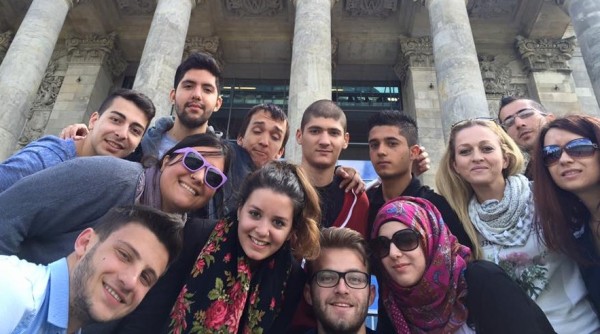
We help students to get admission to German University. We check your school documents, guide you through the visa process and teach you the language to the required level. We teach and accommodate over 300 students of the German language on a daily basis. With over 20 years of experience we guarantee you a high quality teaching program and an excellent support service.
Some reasons why you should study in Germany
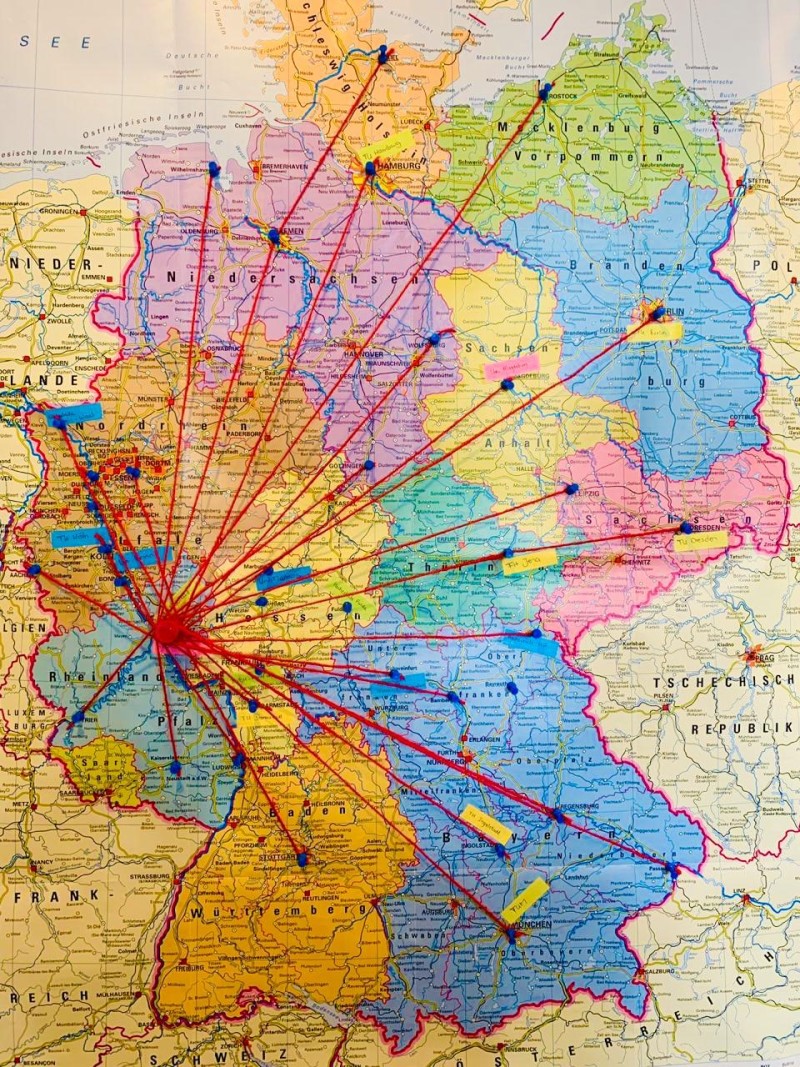
Free Public University Education
The German Government makes huge investments in all public Universities.
This makes long term financial sense when students tranfer into working life here. The tax and wealth then generated in Germany more than repays the initial investment.
Students benefit from this by paying no fees for a top class education.
A successful economy
Germany is the world‘s third largest exporter and third biggest economy.
At the end of 2025 there were over 1.26 million unfilled jobs in Germany:
over 76.000 in Engineering
over 530.000 in other technical roles
German speaking graduates are practically guaranteed a job and career in Germany.
Work and stay
The majority of graduates have a job immediately after graduation as they all have contacts into industry from their part time job and the Bachelor and Master thesis done in a company.
Permanent residency timeline:
After graduation, once you transition into qualified employment, you can qualify for permanent residency after 2 years of working.
Safe and welcoming
Germany remains one of the safest countries in the world for international residents, offering robust legal protections and strong social stability. Millions of regular citizens actively champion diversity, fostering an everyday "culture of welcome" across local communities. Through rapid citizenship pathways and extensive support networks, the country ensures newcomers feel secure, valued, and genuinely at home.
Pathways to German Public University
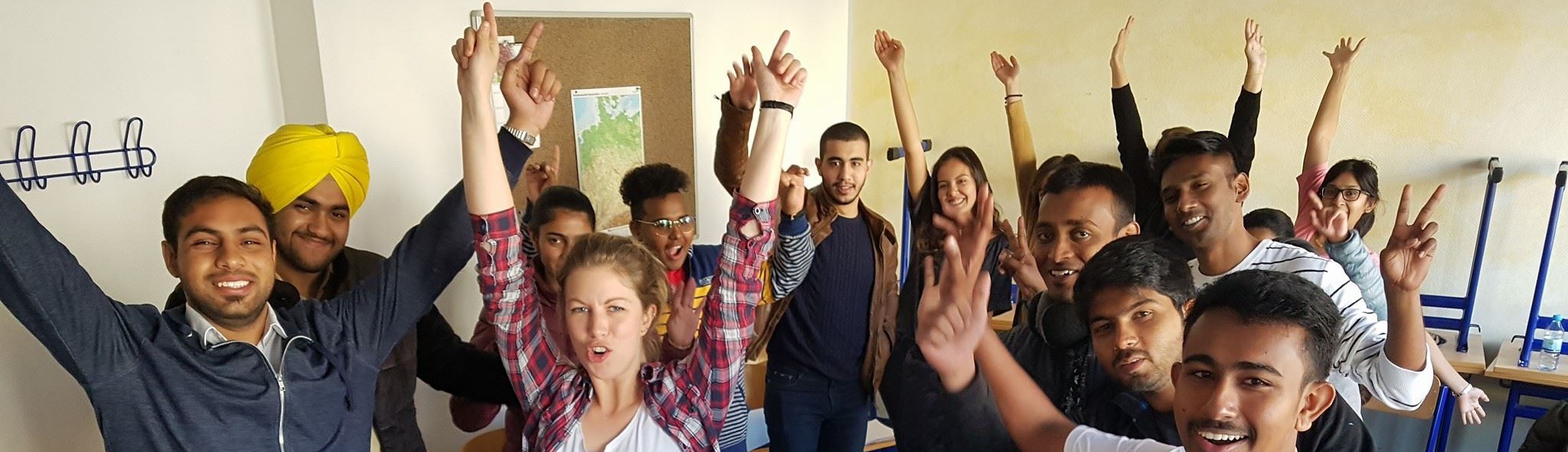
International secondary school qualifications
To enter a German University for a Bachelors program you must have a secondary education level that is equivaltent to a German Abitur (secondary school qualification).
The following are examples of international secondary school qualifications that are equivalent to the German Abitur:
- A levels (with 3 A levels - each with a minimum Grade C),
- IB - with a minimum of 24 points
- West African high school certificate and others from around the world
Students with these qualifications have direct acess to German university once they reach a C1 German language level.
Without equivalent secondary school qualifications
All other students (for example CBSE) must bring their 12 year secondary school education up to the German 13 year level by either:
- learning German to a C1 level and then doing a foundation year (Studienkolleg) in Germany.
- or studying at a university in your home country for 1-2 years and then learning German to a C1 level
- Alternatively if you pass the TestAS and the C1 level German exam there are a growing number of Universities that also accept this combination (no Foundation year required).
With Bachelors Degree
Students who already have a Bachelors from a recognised University with an excellent GPA need to pass the C1 German to gain entry to Masters level programs.
We get all qualified students a conditional University Admission from a German Public University within 2-4 weeks of applying to ISL.
German Teaching and Exams
The level plan for you to reach C1 German. We start all levels every 5 weeks all year round,
German Courses and Exams
- Experience matters: our teachers have been with us for an average of 10+ years in this program. Over 4500 students have progressed to University after our program
- Our small classes give the teachers and you the chance to explain and use the language
- There is a level test after each level and a TELC Test after B2 and C1 levels
- If you don't pass a level test you can repeat the level at no extra charge (conditions apply)
- You will need 2-3 hours per day of work at home to make fast progress
- 98%+ of our students pass the C1 level test
99% of University courses require you to have a C1 German level
We are licenced testing centers for both exams. In 2025 98% of students passed their C1 Exams with us.
Program Details
Testimonials
Blocked Bank account or Sponsor in Germany
In order to get the visa every student must show financial resouces to sustain them for 1 year—either a sponsor’s garantee or a blocked bank account (Sperrkonto) funded with €11,904 (April 2026) in Germany. We assist with opening the account (incl. Fintiba), documentation, and how the €992/month withdrawal works after arrival.
Every student must show proof of resources in Germany that they can live from from 1 year. They must open a Blocked Account (Sperrkonto). Into this account you must deposit EUR 11904 (net of bank transfer costs). Here are some important things to be aware of for this account:
- This bank account is opened in your name - it is your money in a German bank account
- You must show that this account has been opened and filled in advance of your visa application/interview
- If your visa is refused then you will get a refusal letter from the German Embassy - with this the bank in Germany will return your money from the blocked account to your account at home.
- When you get to Germany you are only able to withdraw EUR 992 per month - this is your living money so to say
- Once this EUR 11904 has been used up (after 12 months) - you will need to fill it up again to get your visa extended for another 12 months, unless you are in University by then and can show a work contract that gives you Minimum Euro 992 per month.
- These amounts change (increase) every year to reflect living costs here. The information here is for April 2026.
A person or company resident in Germany - with a reliable income can give a guarantee letter (Verpflichtungserklärung) for you. This they do by going to their local "Ordnungsamt" or "Ausländeramt" and signing this guarantee. The local Government office in Germany will ask them to prove that they have a certain income level in order to support you. By signing this, your sponor is then fully liable to support you in every respect until you finsih your studies. The government will ask them to pay for any emergency you may have or deportation from the country if you mis-use your visa.
Some nationalities are unable to make bank transfers to Germany from abroad. We operate an escrow account for a limited number of under 18 years old students. Students can deposit money there and when they are in Germany this is transferred to their new German bank account.
Account details:
ISL Sprachschule GmbH & Co. KG
IBAN: DE02577615910104645700
BIS/SWIFT: GENODED1BNA
VOLKSBANK RHEINAHREIFEL EG, Rizzastr 34, 56068 Koblenz
Fintiba Bank
Open Account with Fintiba
Fintiba also does such accounts for students who are under 18 years of age when opening an account (the parents open it for the student)
If you have more qestions about this - we will advise you.
to fintibaHave questions ?
Hours of Operation
Monday - Thursday: 08.00 - 4.00 pm
Fr.: 08.00 - 2.00 pm
FAQs
Yes, in most universities. There are very few universities that have introduced tuition fees for international students in order to regulate the influx. The only thing you need to pay is a semester fee to the student council. In return you have free public transportation, subsidized food and housing, library, etc.
Very few and the ones that are there have a restricted number of seats. So there is no guarantee that you will get a place. Also, even for English taught courses German is needed as not everything is English. You may have some German books or even exams. Also, if you don’t have fluent German, it will be very difficult to find a company where you can do your Bachelor and Master Thesis as you will need to find a supervisor that is prepared to do this in English with you.
For the majority of courses, but also to be able to find a job and communicate with people, you will need a C1 level.
The majority of course has a total duration of 10 semesters, that is Bachelor and Master. The Master courses are not separate courses, but a continuation of the Bachelor. It is rather uncommon in Germany to leave university after your Bachelor. As the university is free and you are allowed to work, it “pays” to do the Master, as you will have a higher salary level after graduation.
There is no difference in terms of teaching standard or quality. In that aspect all PUBLIC universities in Germany are equal as they are regulated by the government. The different ranking comes from the soft aspects around the actual teaching such as student life, public transport, availability of housing etc.
Yes, in most universities. There are very few universities that have introduced tuition fees for international students in order to regulate the influx. The only thing you need to pay is a semester fee to the student council. In return you have free public transportation, subsidized food and housing, library, etc.
There are a number of subjects where there are more applicants than seats, this usually is in the medicine, dentistry, law or psychology area. To get a place for courses like this you must be really excellent.
There are a number of reasons. First of all, in Germany education is seen as a basic right for every child and should not depend on the income of the parents. Hence, it is free to everybody. Secondly, Germany has a decreasing population. So we need young, qualified people to fill the many positions. There is no better investment for Germany, than to invest in the education of young people and then have them available to the labour market.
Definitely public. ALL public universities are regulated by the government and offer the same high level of teaching. Also, the entry requirements are much higher (and therefore you have a higher standard). Private universities can take anybody they want, they are only interested in the money.
You will arrive in Germany with a student visa, this is basically a permanent residence as you can come and go as you wish and also travel freely in the EU. It even allows you to work for up to 20 hours a week while at university. Once you graduate this automatically changes to a permanent residence with a work allowance. There is no need to leave the country again or to apply for a different visa.
When coming to Germany you need to have a certain amount of in a blocked account. This covers your living expenses as you will most likely not find a job until you speak the language. So you will need this at least for the first year. Later you can either top up the blocked account again or have a job to cover your living expenses.
Yes, it is a very safe country with a very low crime rate. Overall the Germans are very open minded and welcoming people. There is no discrimination in general. Don’t be blinded by the news. Only bad news is interesting to report in a paper or the news.
Yes, we have over 1.1 million unfilled positions and it is easy to find a job in most areas. The industry is letting people go, but they are not skilled workers or university graduates, they are just basic low level workers.
You can stay forever, that is what Germany is hoping for. We need qualified people. So Germany wants you to stay.
In theory yes, as long as you can support them and learn some German. For family member an A1 level is needed, but they will have a rather lonely life if they cannot communicate here.
Yes, you can. There are certain requirements that need to be fulfilled and we always recommend that you contact us and ask us for the specific combination you have, but I will give you some general guidelines. You need to complete your Full A levels, you cannot study in Germany with AS or BTEC, not even if you do a foundation year then. This is not an option, for A levels it is either everything (= you are either fully qualified) or nothing (= you don’t have the correct A levels or grades). You will need to have THREE INDEPENDENT A levels, two of them need to be related to what you wish to study. For the restricted subjects, such as medicine or dentistry all three need to be related to what you wish to study. For the non-restricted subjects, you need to have minimum grade C for all three subjects. For the restricted subjects, you will need to have A*. Also, if you have a subject from list C, then this is considered to be a vocational subject and then you can only study something in that subject area. Please keep in mind that there is no entry unless you have your FULL A levels. If you fulfil the requirements for British curriculum, you can start your Bachelor after the language up to C1 level and complete the language, Bachelor and Master within 6 years.
Yes, in most universities. There are very few universities that have introduced tuition fees for international students in order to regulate the influx. The only thing you need to pay is a semester fee to the student council. In return you have free public transportation, subsidized food and housing, library, etc.
Independent A Level subjects are subjects from a different subject area. Business and economics or Maths and further maths are not independent. But two science subjects or two languages would always be considered independent.
Yes, you can. You will need 3 subjects at HL and 3 subjects at SL. Also, you will need to have minimum 4 points in each subject for the non – restricted subjects, and 6 or 7 points for the restricted subjects such as medicine or dentistry. In general you need to have Maths at HL, the only exception here is for the non engineering or science subjects. For these you can have Maths at SL level plus a science or language at HL. Among the 6 subjects you need to have 2 languages, the first one is always English as language A, the second needs to be language B (not AB initio). If you fulfil all the requirements you can start your Bachelor and Master after completing the language up to C1 level. If you do not fulfil the requirements, for example if you have language ABintio or no Maths at HL, then you will need to do the Studienkolleg (= foundation year).
In theory yes, but there are a lot of very specific requirements that need to be fulfilled and you always have to the Studienkolleg ( = foundation year). The requirements include certain subjects, the correct accreditation body, certain grades, a certain number of credits, a certain GPA and a few more things. Also, you need to have had at least the last 3 years consecutively in the American Curriculum. Please contact us with your official transcript of records or if you don’t have this yet, send us your yearly reports as of year 9. The only way to skip foundation year with the AMD, is to have 4 AP subjects (on top of everything above) with at least 3 points. The AP subjects must be: Maths, English, a science plus one other of your choice.
Yes, you can. As this is a European school leaving cert it is fully accepted in Germany and equivalent to the German Abitur. As long as you pass, you are qualified for university after reaching a German C1 level. If you want to do a restricted subject, such as Medicine, then you need excellent grades. There are no other requirements to be considered.
Yes, you can, but you must do the Studienkolleg (= foundation year) after the language and before starting your Bachelor. As your schooling is shorter than in Germany, you need this extra year to have the same knowledge level as the German students. So the Studienkolleg, the Bachelor and the Master have a total of 6 years, which is the same as in Pakistan. Just the split is different. You have 12 years of school plus 6 university and in Germany you will have the same total duration. Please note that the stream, i.e. your subjects in school, determine the choice of subjects you can do at university. Also, you need to have at least 60% in your intermediate to qualify. When applying for university, your school grades will not be considered any more, only the grades in the Studienkolleg will be taken into consideration.
Yes, you can, but you must do the Studienkolleg (= foundation year) after the language and before starting your Bachelor. As your schooling is shorter than in Germany, you need this extra year to have the same knowledge level as the German students. So the Studienkolleg, the Bachelor and the Master have a total of 6 years, which is the same as in India. Just the split is different. You have 12 years of school plus 6 university and in Germany you will have the same total duration. Please note that the stream, i.e. your subjects in school, determine the choice of subjects you can do at university. Also, you need to have at least 70% in your CBSE to qualify. When applying for university, your school grades will not be considered any more, only the grades in the Studienkolleg will be taken into consideration.
In theory there are a few options. You can for example take the JEE exam in India. If you pass both parts, i.e. the main and the advanced, then you can skip the Studienkolleg. There is in theory also the option of doing all the content of the Studienkolleg in self-study and just take the exam. In reality that is not a good option and students are rarely successful. We strongly recommend to take the “normal” route and do the Studienkolleg.
Yes, you can, but you must do the Studienkolleg (= foundation year) after the language and before starting your Bachelor. As your schooling is shorter than in Germany, you need this extra year to have the same knowledge level as the German students. So the Studienkolleg, the Bachelor and the Master have a total of 6 years, which is the same as in the UAE or most other countries. Just the split is different. You have 12 years of school plus 6 university and in Germany you will have the same total duration. As long as you pass your MOE with 60% you can opt for any subject area in the Studienkolleg and universitx. When applying for university, your school grades will not be considered any more, only the grades in the Studienkolleg will be taken into consideration.
Yes, you can, but you must do the Studienkolleg (= foundation year) after the language and before starting your Bachelor. As your schooling is shorter than in Germany, you need this extra year to have the same knowledge level as the German students. So the Studienkolleg, the Bachelor and the Master have a total of 6 years, which is the same as in Qatar or most other countries. Just the split is different. You have 12 years of school plus 6 university and in Germany you will have the same total duration. As long as you pass your Qatari National exam with 60% you can opt for any subject area in the Studienkolleg and university. When applying for university, your school grades will not be considered any more, only the grades in the Studienkolleg will be taken into consideration.
Yes, you can, but you must do the Studienkolleg (= foundation year) after the language and before starting your Bachelor. As your schooling is shorter than in Germany, you need this extra year to have the same knowledge level as the German students. So the Studienkolleg, the Bachelor and the Master have a total of 6 years, which is the same as in the Philippines or most other countries. Just the split is different. You have 12 years of school plus 6 university and in Germany you will have the same total duration. The stream or subjects in school will determine the area of university courses. When applying for university, your school grades will not be considered any more, only the grades in the Studienkolleg will be taken into
Yes, you can. If you have more than 70% you can start your university right after completing the German up to C1. The subjects in school, i.e. your stream, will determine the subject area for university. If you have between 60% and 69% you will need to do the Studienkolleg to improve your grades. When applying for university, your school grades will not be considered any more, only the grades in the Studienkolleg will be taken into consideration.
Yes, you can, but you must do the Studienkolleg (= foundation year) after the language and before starting your Bachelor. As your schooling is shorter than in Germany, you need this extra year to have the same knowledge level as the German students. So the Studienkolleg, the Bachelor and the Master have a total of 6 years, which is the same as in Iran or most other countries. Just the split is different. You have 12 years of school plus 6 university and in Germany you will have the same total duration. As long as you pass your Iranian High school exam, you are qualified to do the Studienkolleg after learning German up to C1 level. When applying for university, your school grades will not be considered any more, only the grades in the Studienkolleg will be taken into consideration.
In general yes, there are however a lot of individual criteria that need to be fulfilled depending on the province your high school cert is from. For most provinces you need to do the Studienkolleg after reaching the German C1 level and before starting the Bachelor. Usually the subject combination in year 10 to 12 determines the subject area you can do in university. If you have the Canadian High school cert from Ontario or Quebec you will not need the Studienkolleg and can start the Bachelor right after the German C1.
The Studienkolleg in Germany is similar to a foundation year. It is a bridge between school and university. It covers subject areas that German students (and some other curricula) cover in school. In terms of content it is “belongs” to school, in terms of duration, it is part of university, as the university in Germany is shorter than in most other countries, i.e. it takes 10 semester or 5 years to complete Bachelor and Master. There are different courses offered at Studienkolleg.
There are T, M, W and G courses. The T course is for all engineering and science course at university and covers Physics, Maths and Chemistry. The M course is for all medical related or biology course and covers Physics, Maths, Chemistry and Biology. The W course is for business and economics courses at university and covers Maths, Business and economics. The G course is for social science courses and has various subjects, depending on what social science you want to study.
There are a few public Studienkollegs were you pay no fees. However, as the number of foreign students in Germany increases every year (but the number of seats doesn’t ☹) it is difficult to get a place. There is a fierce competition and you must be among the top students in an entrance exam. There are a number of private Studienkollegs, for which you need to pay, but they prepare you extremely well for the exam at the end of the Studienkolleg.
It is called Feststellungsprüfung FPS and can only repeat this exam one time. If you don’t clear the exam at the second attempt, you will have to leave Germany again as you will then not be qualified to start your university.
Yes, you can. It is a so-called restricted subject. So there is no guarantee to get a place and it depends on your curriculum how big the chances are to get a place. In general it is easier if you have super grades and if you have a school leaving cert that does not require Studienkolleg.
Yes, you can, but there are certain criteria that need to be fulfilled. Also, you need to understand that a Master in Germany is not a separate course, but rather a continuation of your Bachelor. So, you can only do a Master in the same subject area as your Bachelor. To be able to start at a Master level, you need to have a GPA of at least 75%, your Bachelor needs to be from a university that is accredited in Germany and you need to have at least 210 credit hours. If one of these points is not fulfilled, you cannot start at a Master level. Depending on the subjects and grades, you may be able to start a higher semester Bachelor or you may have to re-start another Bachelor. Also, your school leaving cert would have needed to qualify you to study in Germany. We need to see your Bachelor degree and transcript to evaluate the above, then we can let you know
You will need to reach a C1 level before you can start your Bachelor. The biggest part of this course must be done in Germany as you need exposure to the language and immersion.
We at ISL teach the course from A1 to C1 in 40 weeks with 30 lessons each, we have a maximum of 14 students per group to ensure qualify and ample time to practice your speaking.
There are different options. You can take a Goethe exam, the DSH exam, the ÖSD, the TestDaF or the TELC. With over 25 years of experience, we offer the TELC C1 at ISL as this is the most student friendly and the fastest one to receive the results.
You can take each exam as often as you need. You can even repeat the exam if you passed if you want to improve your points. Please note that the oral part needs to be passed separately, the other 3 skills (listening, speaking and writing) need to be passed on average and one part can compensate for another.
ISL guides you from application to arrival and into university:
- Pre‑check of school/university documents for admission to German public universities
- Excellent partner universities offering courses in Engineering, Business, and Health Sciences
- Conditional admission letter with a guaranteed place (conditions apply)
- Organization of insurance, accommodation, and blocked account
- High‑quality German language courses focused on fast progress and strong results
Bachelor’s (Abitur equivalency):
You must have a secondary qualification equivalent to the German Abitur. Examples that qualify for direct access (once you reach C1 German):
- A levels: 3 subjects, each at minimum grade C
- IB Diploma: Minimum 24 points
- West African Senior School Certificate (and other recognized equivalents)
If you don’t hold an Abitur‑equivalent, you can qualify by either:
- Learning German to B2 and completing a Foundation Year (Studienkolleg) in Germany (~40 weeks; includes German up to C1), or
- Studying at a university in your home country for 1–2 years and then reaching C1 German
Alternative route: If you pass TestAS and the C1 German exam, a growing number of universities will accept you without a Foundation Year (university‑dependent).
Master’s:
Holders of a recognized Bachelor’s (with the required GPA) need to pass C1 German to enter Master’s programs.
- Direct Bachelor’s access: C1 German (plus Abitur‑equivalent)
- Without Abitur‑equivalent: B2 + Studienkolleg (which also teaches up to C1)
- Alternative: C1 + TestAS (accepted by some universities, no Foundation Year)
How ISL supports you: Intensive German courses with qualified teachers, small classes, and interactive methods to help you reach the required level as soon as possible.
- Timeline: ISL obtains conditional admission from a German public university for all qualified students within 2–10 weeks of applying to ISL.
- Conditions: Your guaranteed place becomes fully valid once you pass the C1 German exam and either complete the Foundation Year/Studienkolleg or (where applicable) pass TestAS. (The TestAS route is accepted only by certain universities.)
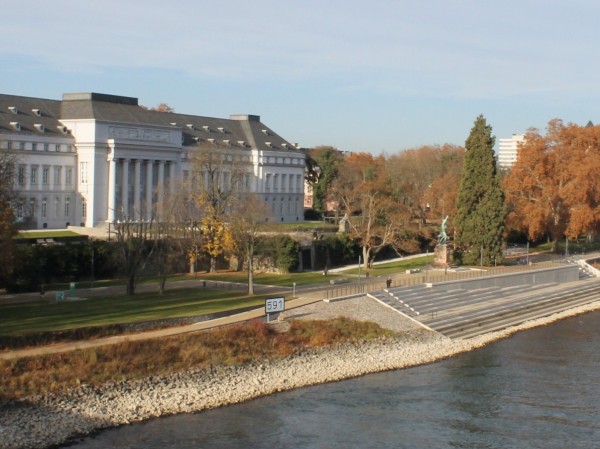
This program only runs in Koblenz
Our Programs